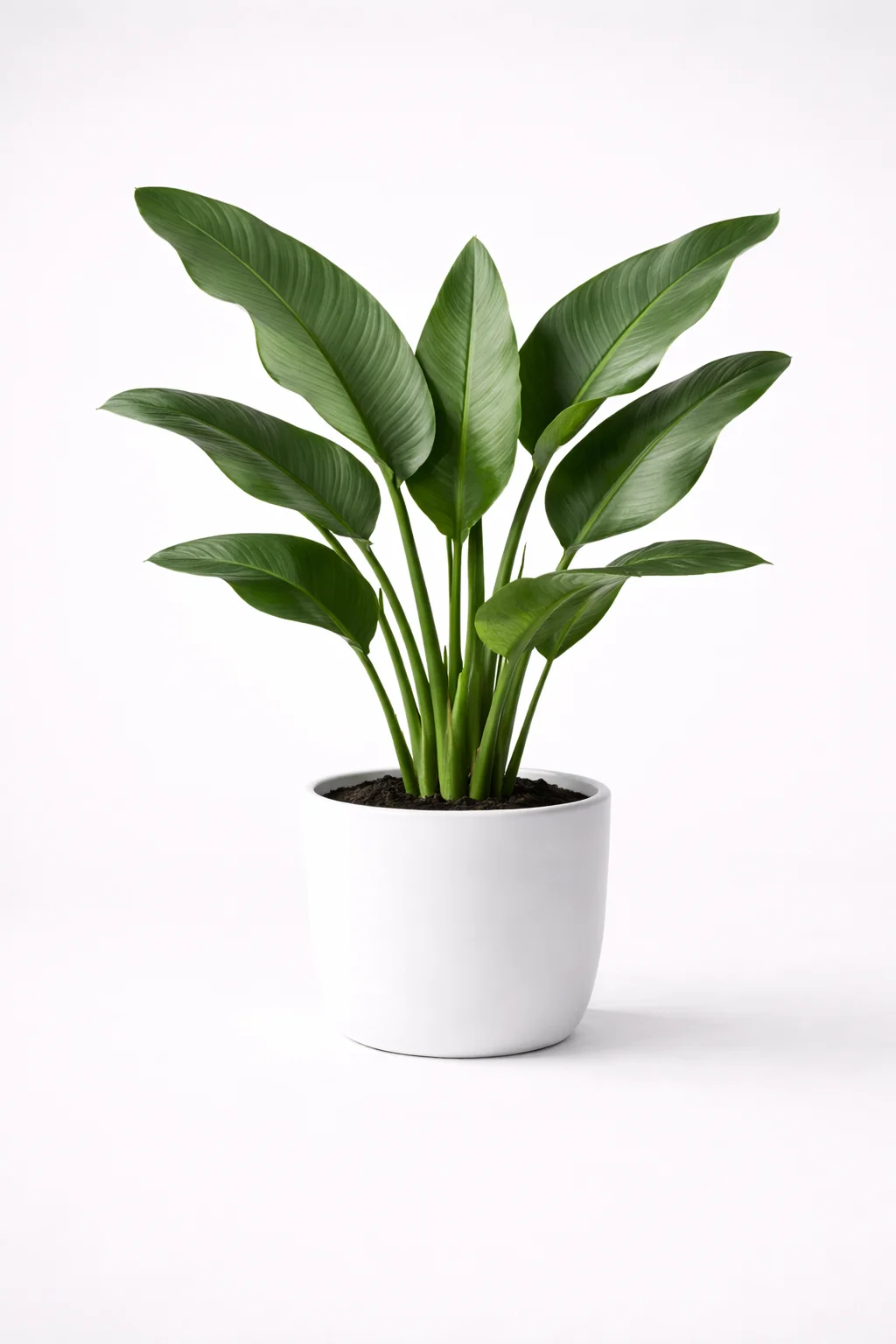
Bird of Paradise
Also known as: Strelitzia
Light
Direct Sun
Water
Moderate
Humidity
Average
Size
Large
90-180+ cm (3-6+ ft)
⚠️ Toxic to Pets
Bird of Paradise contains compounds that are toxic to cats and dogs if ingested. Keep this plant out of reach of pets, or consider a pet-safe alternative.
Care Requirements
About the Bird of Paradise
The Bird of Paradise (Strelitzia reginae) is native to South Africa's eastern coastal regions, where it grows in dense clumps along riverbanks and forest clearings. Named for its spectacular orange and blue flowers that resemble an exotic bird in flight, the plant produces large, banana-like leaves on long, sturdy petioles from an underground rhizome. Indoors, the bold paddle-shaped foliage can reach 1.5 meters tall, though flowering is rare without abundant direct sunlight. Its dramatic, tropical silhouette makes it a popular architectural accent plant in contemporary interiors.
Origin: South Africa
Care Tips
Requires bright light, ideally with several hours of direct sun, to thrive and have any chance of flowering indoors. Water regularly during the growing season, allowing the top 5 cm to dry between waterings, and reduce in winter. Enjoys high humidity -- mist leaves or use a humidifier. Brown, splitting leaves are common and partly natural, though low humidity and underwatering worsen it. Feed every two weeks in spring and summer with a balanced fertilizer. Repot every 2-3 years; this plant flowers best when slightly root-bound. Propagate by dividing established clumps.
Is This Plant Right for You?
Best For
- Bright rooms with good natural light
- Making a statement in spacious rooms
Not Ideal For
- Homes with curious pets
- Small apartments or tight spaces
Bird of Paradise compared with…
Compare Bird of Paradise with any other plant →Similar Plants You Might Like
Croton
Codiaeum Variegatum
Ficus Audrey
Banyan Tree, Ficus Benghalensis
Norfolk Island Pine
Araucaria Heterophylla
Fiddle Leaf Fig
Ficus Lyrata
Philodendron Birkin
White Wave Philodendron
Philodendron Pink Princess
PPP, Blushing Philodendron