Bird of Paradise vs Majesty Palm
Both are big and light-hungry. The majesty palm is pet-safe but browns in dry air; the bird of paradise needs your brightest window and is toxic to pets.
Majesty Palm is non-toxic to cats and dogs. Bird of Paradise is toxic to cats and dogs if chewed, so it needs a shelf pets cannot reach. Bird of Paradise is rated medium to care for, Majesty Palm hard. If this is an early houseplant or the spot is hard to get right, start with the Bird of Paradise.
What they share: both stay large.
Choose
Bird of Paradise if…
- ✓you have a bright window to give it (very bright light)
- ✓you forget to water - it prefers to dry out between drinks
- ✓your home runs dry in winter and you will not add a humidifier
- ✓you want the lower-risk plant of the two
- ✓it can go somewhere pets genuinely cannot reach
Choose
Majesty Palm if…
- ✓your spot is the dimmer of the two - it manages on bright indirect light
- ✓you like a plant that asks for attention on a schedule
- ✓it will live in a bathroom, kitchen or a humidified room
- ✓you are happy to fuss a little for the better-looking leaves
- ✓cats or dogs chew your plants - this one is non-toxic
Bird of Paradise vs Majesty Palm: side by side
| Attribute |
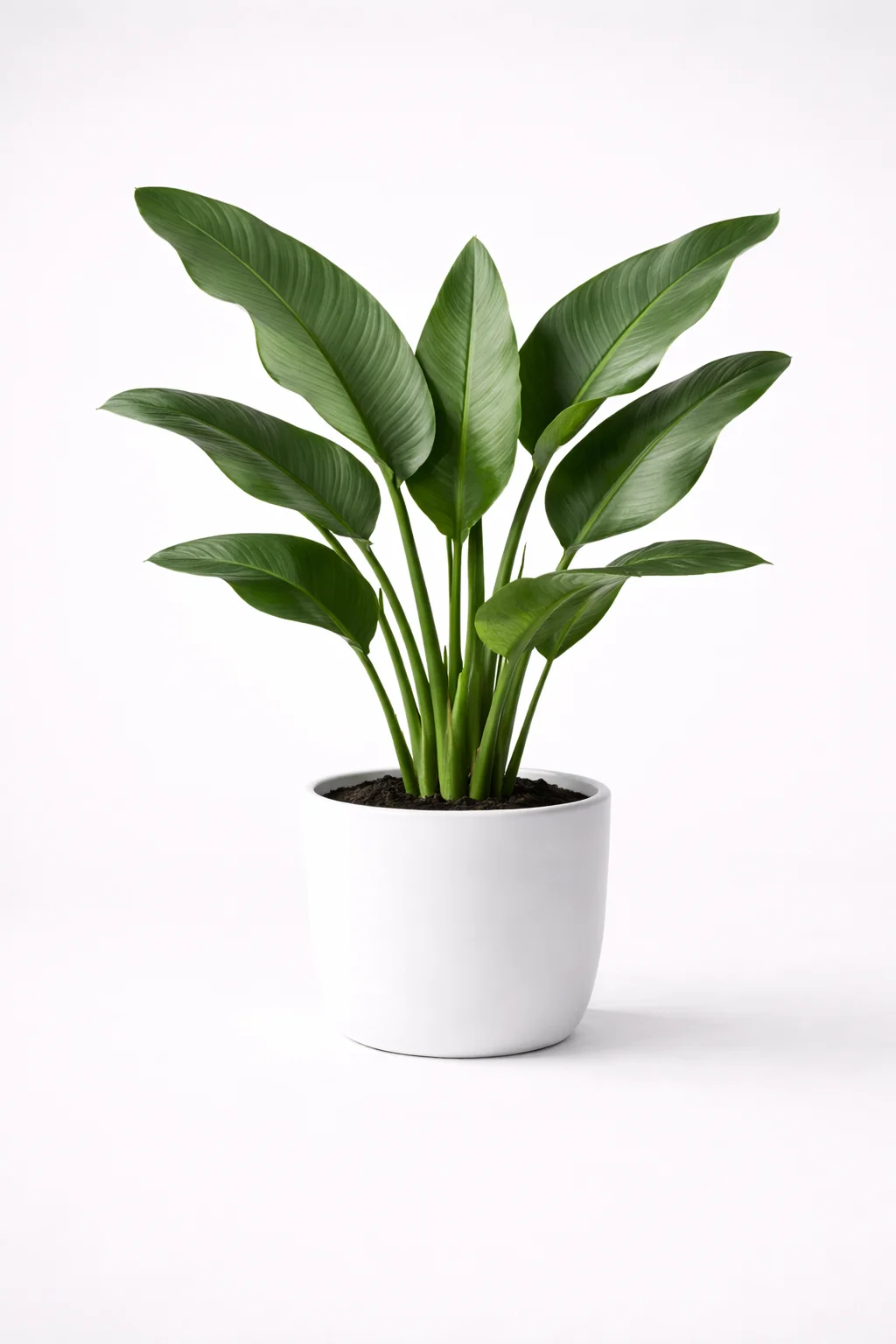 Bird of Paradise
|
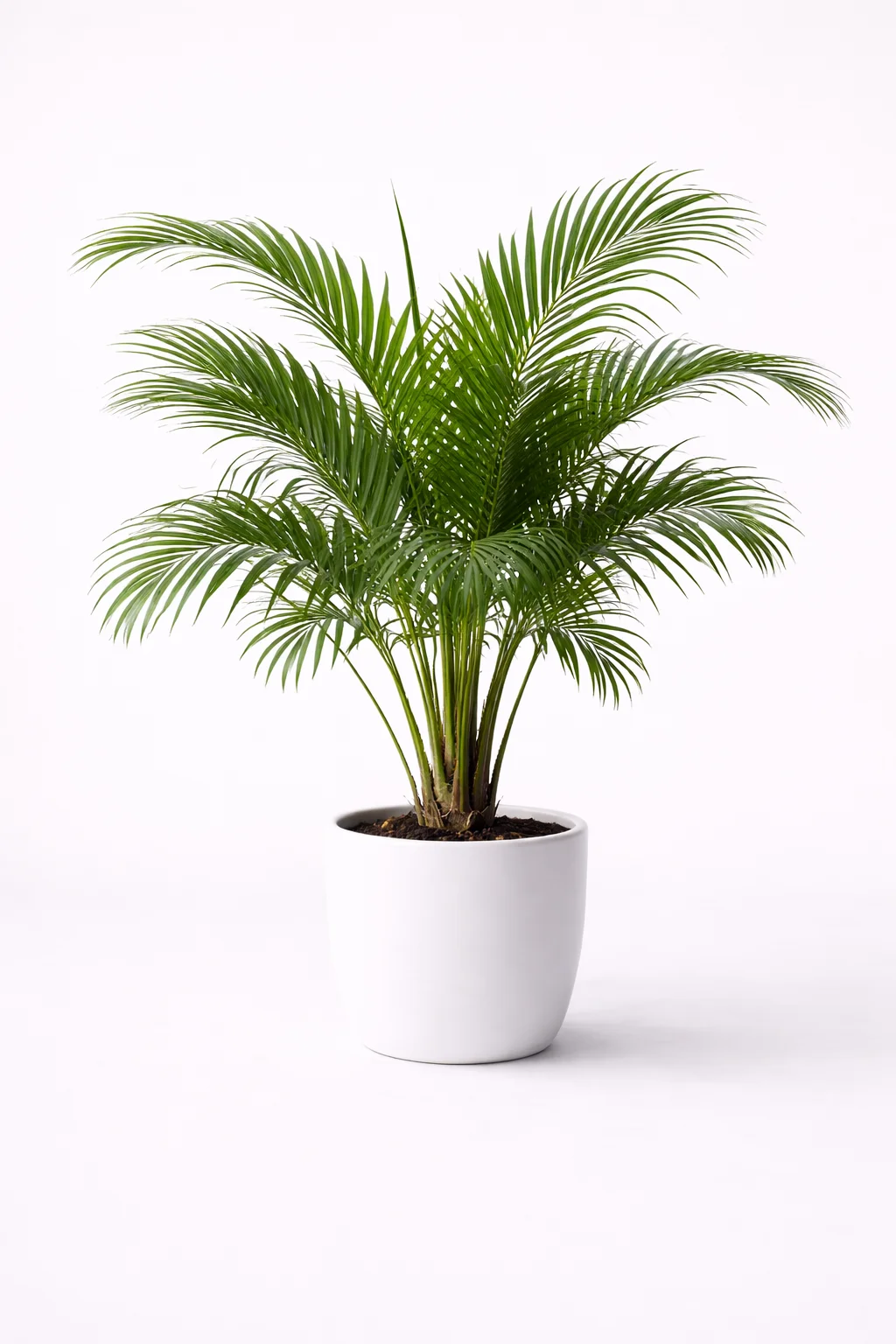 Majesty Palm
|
|---|---|---|
| Plant type | Foliage | Palm |
| Difficulty | medium | hard |
| Light | ●●●●● 5/5 Very bright light |
●●●●○ 4/5 Bright indirect light |
| Water | ●●●○○ 3/5 Moderate |
●●●●○ 4/5 High |
| Humidity | ●●●○○ 3/5 Average |
●●●●○ 4/5 Above average |
| Pet safe | Toxic to cats and dogs | Safe |
| Mature size | Large 90-180+ cm (3-6+ ft) |
Large 90-180+ cm (3-6+ ft) |
| Growth rate | Moderate | Moderate |
| Air purifying | No | Yes |
| Native to | South Africa | Madagascar |
Key differences between Bird of Paradise and Majesty Palm
Majesty Palm is pet-safe, Bird of Paradise is not
Majesty Palm is non-toxic to cats and dogs. Bird of Paradise is toxic to cats and dogs if chewed, so it needs a shelf pets cannot reach.
Bird of Paradise is the easier plant
Bird of Paradise is rated medium to care for, Majesty Palm hard. If this is an early houseplant or the spot is hard to get right, start with the Bird of Paradise.
Majesty Palm copes with less light
Majesty Palm needs bright indirect light (4/5) - beside a bright window, no midday sun on the leaves. Bird of Paradise wants very bright light (5/5), a south or west window with some direct sun.
Majesty Palm drinks more
Bird of Paradise wants moderate watering (3/5) - water when the top 2-3 cm is dry, roughly weekly. Majesty Palm needs high watering (4/5): keep the soil evenly moist, never fully dry.
Majesty Palm needs damper air
Majesty Palm rates 4/5 for humidity - group plants or run a humidifier in winter. Bird of Paradise rates 3/5, so normal household humidity works.
Majesty Palm is the air-purifying one
Majesty Palm appears on the common indoor air-purifying lists; Bird of Paradise does not. In a normal room the effect of either is modest, so treat it as a tiebreaker rather than a reason to buy.
Different plant types: foliage vs palm
Bird of Paradise is a foliage plant and Majesty Palm is a palm plant, so they fill different jobs in a room even when their care overlaps.
They come from different habitats
Bird of Paradise originates in South Africa; Majesty Palm in Madagascar. Matching the original habitat is the quickest way to guess what each one wants indoors.
How to tell Bird of Paradise and Majesty Palm apart
Both are big, thirsty and light-hungry. The bird of paradise has broad paddle leaves that split naturally with age and needs the single brightest spot in the house. The majesty palm is feathery and pet-safe but browns badly in dry indoor air. Neither is a low-light corner plant.
Care at a glance
Bird of Paradise
Strelitzia
Dramatic tropical plant with large paddle-shaped leaves. Can produce stunning flowers.
Care in one line: Bright direct light, regular watering, feed monthly.
Full Bird of Paradise care guide →
Majesty Palm
Ravenea Rivularis
Graceful tropical palm. More demanding than other palms indoors.
Care in one line: Bright light, keep moist, high humidity, feed regularly.
Full Majesty Palm care guide →Bird of Paradise vs Majesty Palm: common questions
What is the difference between Bird of Paradise and Majesty Palm? +
Both are big, thirsty and light-hungry. The bird of paradise has broad paddle leaves that split naturally with age and needs the single brightest spot in the house. The majesty palm is feathery and pet-safe but browns badly in dry indoor air. Neither is a low-light corner plant. On care, majesty Palm is non-toxic to cats and dogs. Bird of Paradise is toxic to cats and dogs if chewed, so it needs a shelf pets cannot reach.
Which is easier to care for, Bird of Paradise or Majesty Palm? +
Bird of Paradise. It is rated medium while Majesty Palm is hard, and it is more forgiving about light and watering mistakes.
Is Bird of Paradise or Majesty Palm safe for cats and dogs? +
Majesty Palm is non-toxic to cats and dogs. Bird of Paradise is toxic to cats and dogs if chewed, so keep it out of reach or choose the Majesty Palm.
Which needs less light, Bird of Paradise or Majesty Palm? +
Majesty Palm. It scores 4/5 for light and beside a bright window, no midday sun on the leaves. Bird of Paradise scores 5/5 and a south or west window with some direct sun.
Which needs more water, Bird of Paradise or Majesty Palm? +
Majesty Palm, at 4/5 - keep the soil evenly moist, never fully dry. Bird of Paradise scores 3/5: water when the top 2-3 cm is dry, roughly weekly.
Comparing something else?
Put any two or three of our 116 houseplants head to head on light, water, humidity, size and pet safety.
Build your own comparison →