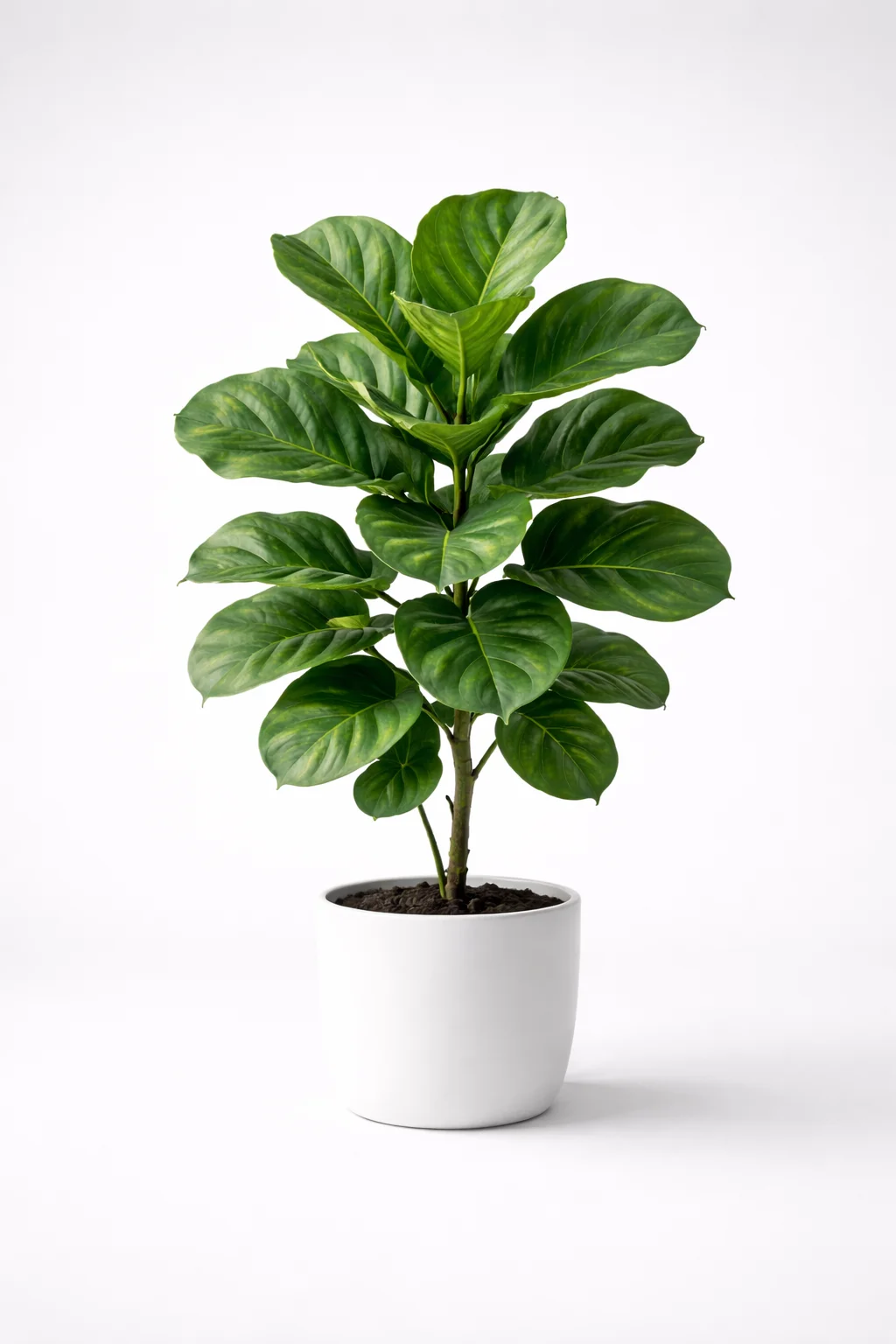
Fiddle Leaf Fig
Also known as: Ficus Lyrata
Light
Direct Sun
Water
Moderate
Humidity
High
Size
Large
90-180+ cm (3-6+ ft)
⚠️ Toxic to Pets
Fiddle Leaf Fig contains compounds that are toxic to cats and dogs if ingested. Keep this plant out of reach of pets, or consider a pet-safe alternative.
Care Requirements
About the Fiddle Leaf Fig
The Fiddle Leaf Fig (Ficus lyrata) grows naturally in lowland tropical rainforests of western Africa, from Cameroon to Sierra Leone, where it can reach 15 meters as a banyan-type tree. Its large, heavily veined, violin-shaped leaves can exceed 40 cm in length and have a leathery texture with prominent midribs. Indoors it develops a slender trunk topped with a lush canopy of foliage. Despite its reputation for being temperamental, its dramatic silhouette and sculptural presence have made it a design staple in modern interiors worldwide.
Origin: West Africa
Care Tips
Requires bright, consistent indirect light -- ideally near a large east or south-facing window with filtered sun. Water when the top 5 cm of soil is dry; inconsistent watering causes brown spots and leaf drop. This plant dislikes being moved and may drop leaves after relocation, so find a permanent spot. Maintain humidity above 40% and keep away from cold drafts and heating vents. Wipe large leaves regularly to remove dust and support photosynthesis. Watch for root rot in soggy soil and spider mites in dry conditions. Propagate via stem tip cuttings or air layering.
Is This Plant Right for You?
Best For
- Bright rooms with good natural light
- Making a statement in spacious rooms
- Bathrooms or rooms with humidifiers
Not Ideal For
- Beginners or those with limited time
- Homes with curious pets
- Small apartments or tight spaces
Fiddle Leaf Fig compared with…
Compare Fiddle Leaf Fig with any other plant →Similar Plants You Might Like
Bird of Paradise
Strelitzia
Alocasia Polly
African Mask Plant, Elephant Ear
Alocasia Zebrina
Zebra Alocasia
Yucca
Yucca Elephantipes, Spineless Yucca
Monstera Deliciosa
Swiss Cheese Plant, Split-Leaf Philodendron
Rubber Plant
Ficus Elastica