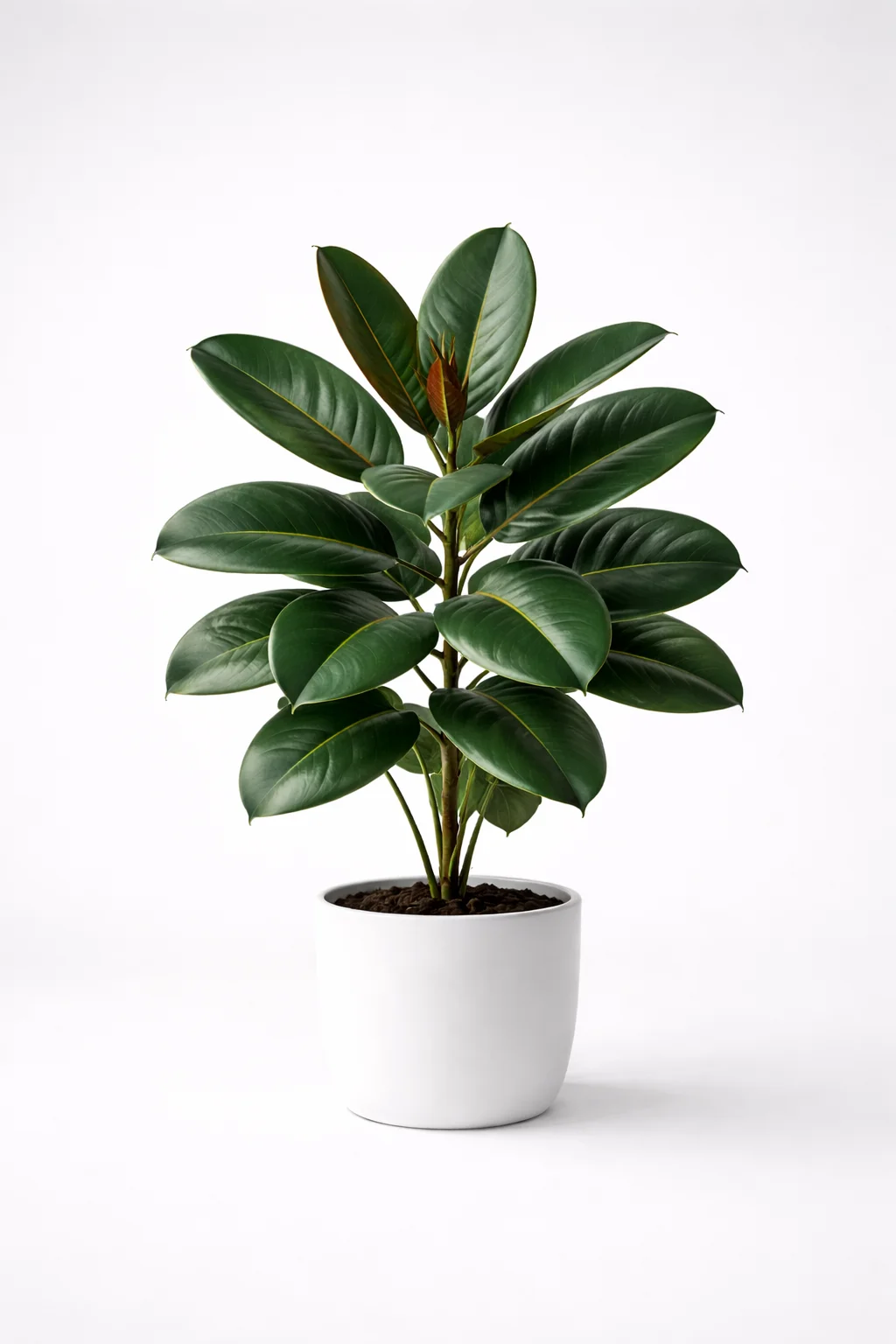
Rubber Plant
Also known as: Ficus Elastica
Light
Bright Indirect
Water
Low
Humidity
Average
Size
Large
90-180+ cm (3-6+ ft)
⚠️ Toxic to Pets
Rubber Plant contains compounds that are toxic to cats and dogs if ingested. Keep this plant out of reach of pets, or consider a pet-safe alternative.
Care Requirements
About the Rubber Plant
The Rubber Plant (Ficus elastica) is native to the tropical forests of Southeast Asia, spanning India through Indonesia, where it grows into a massive tree reaching 30 meters. Once commercially harvested for its latex sap, it is now valued as a handsome indoor plant with thick, glossy, oval leaves in deep green, burgundy, or variegated patterns. New leaves emerge from a bright red-pink sheath that falls away as the leaf unfurls. Indoors it grows steadily as an upright tree-form specimen, lending a bold tropical presence to any room.
Origin: Southeast Asia
Care Tips
Provide bright indirect light; variegated cultivars like Tineke and Ruby need more light to maintain their coloring. Water when the top 2-3 cm of soil dries out, reducing frequency in winter. Overwatering causes leaf yellowing and drop. Wipe the large leaves with a damp cloth monthly to remove dust and enhance their natural sheen. Feed every 2-4 weeks during the growing season with a balanced fertilizer. Prune in spring to control height and encourage branching. Propagate by stem cuttings or air layering. Watch for scale insects on leaf undersides.
Is This Plant Right for You?
Best For
- Bright rooms with good natural light
- Beginners and busy plant parents
- Forgetful waterers
- Making a statement in spacious rooms
Not Ideal For
- Homes with curious pets
- Small apartments or tight spaces
Rubber Plant compared with…
Compare Rubber Plant with any other plant →Similar Plants You Might Like
Monstera Deliciosa
Swiss Cheese Plant, Split-Leaf Philodendron
Philodendron Selloum
Tree Philodendron, Lacy Tree Philodendron
Schefflera Amate
Umbrella Tree, Queensland Umbrella
Ficus Tineke
Variegated Rubber Plant, Ruby Rubber Tree
Dragon Tree
Dracaena Marginata, Madagascar Dragon Tree
Philodendron Prince of Orange
Orange Prince