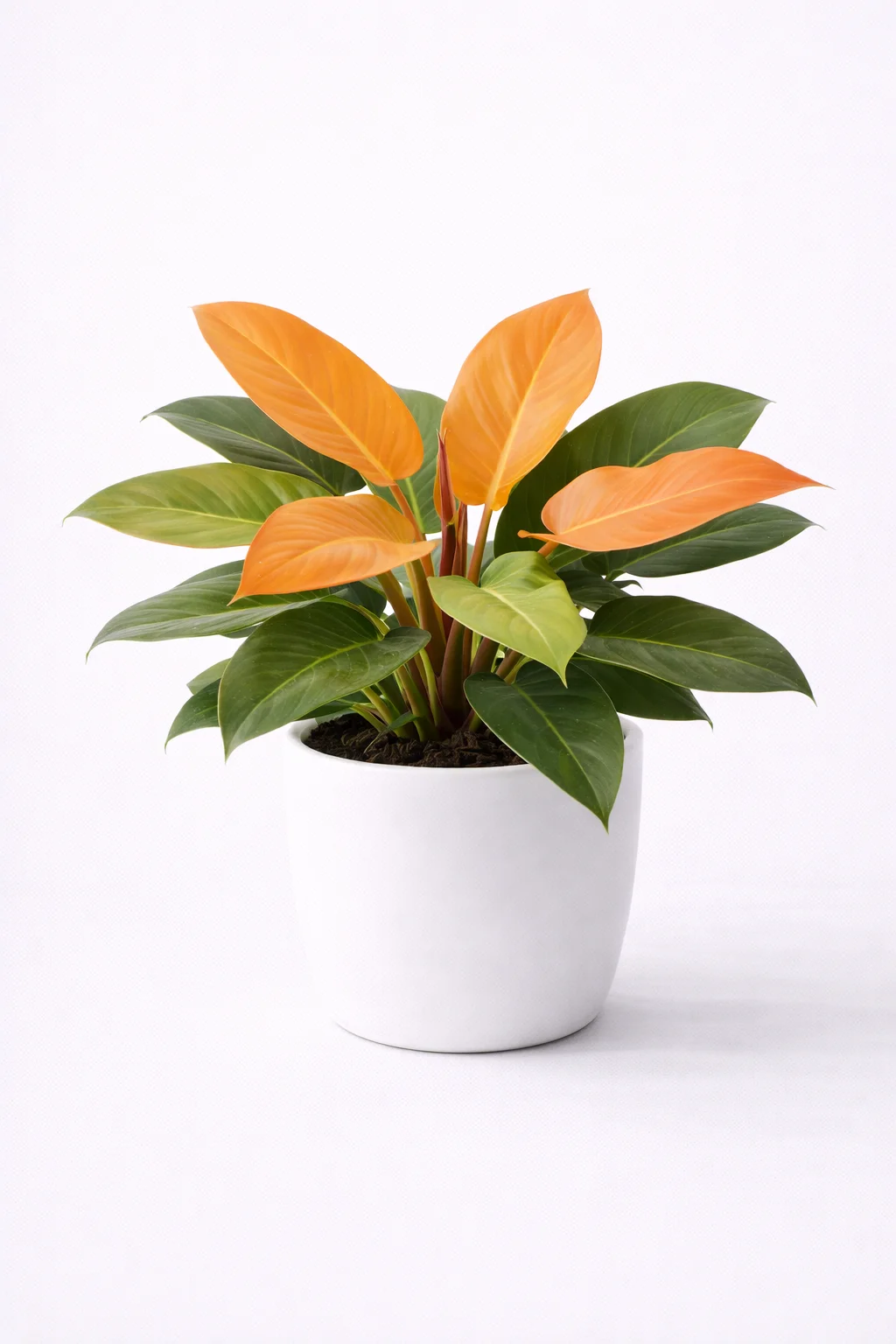
Philodendron Prince of Orange
Also known as: Orange Prince
Light
Bright Indirect
Water
Moderate
Humidity
Average
Size
Medium
30-90 cm (1-3 ft)
⚠️ Toxic to Pets
Philodendron Prince of Orange contains compounds that are toxic to cats and dogs if ingested. Keep this plant out of reach of pets, or consider a pet-safe alternative.
Care Requirements
About the Philodendron Prince of Orange
Philodendron Prince of Orange is a self-heading hybrid cultivar bred for its remarkable leaf color transitions. New leaves emerge in vivid shades of bright orange to copper, then gradually mature through salmon, yellow-green, and finally deep green, creating a stunning multicolored display as multiple leaves of different ages coexist on the same plant. It forms a compact, upright rosette with stiff, oval-elliptic leaves. This dramatic color-changing foliage on a compact, non-vining plant has made it popular for desktops, shelves, and tabletop displays where space is limited but visual impact is desired.
Origin: South America
Care Tips
Provide bright indirect light to intensify the orange coloring of new leaves; in lower light, new foliage emerges more yellow-green. Water when the top 2-3 cm of soil feels dry. Use a well-draining potting mix with perlite. Moderate humidity is appreciated but not critical. Feed every 4-6 weeks during the growing season with a balanced liquid fertilizer. Remove any yellowing lower leaves cleanly at the base. The plant stays relatively compact and rarely needs staking. Propagate by carefully separating offsets from the base during repotting, ensuring each has its own root system.
Is This Plant Right for You?
Best For
- Bright rooms with good natural light
- Beginners and busy plant parents
- Improving indoor air quality
Not Ideal For
- Homes with curious pets
Similar Plants You Might Like
Rhaphidophora Tetrasperma
Mini Monstera, Ginny Philodendron
Monstera Deliciosa
Swiss Cheese Plant, Split-Leaf Philodendron
Snake Plant
Sansevieria, Mother-in-Law's Tongue
Rubber Plant
Ficus Elastica
ZZ Plant
Zamioculcas Zamiifolia, Zanzibar Gem
Chinese Evergreen
Aglaonema