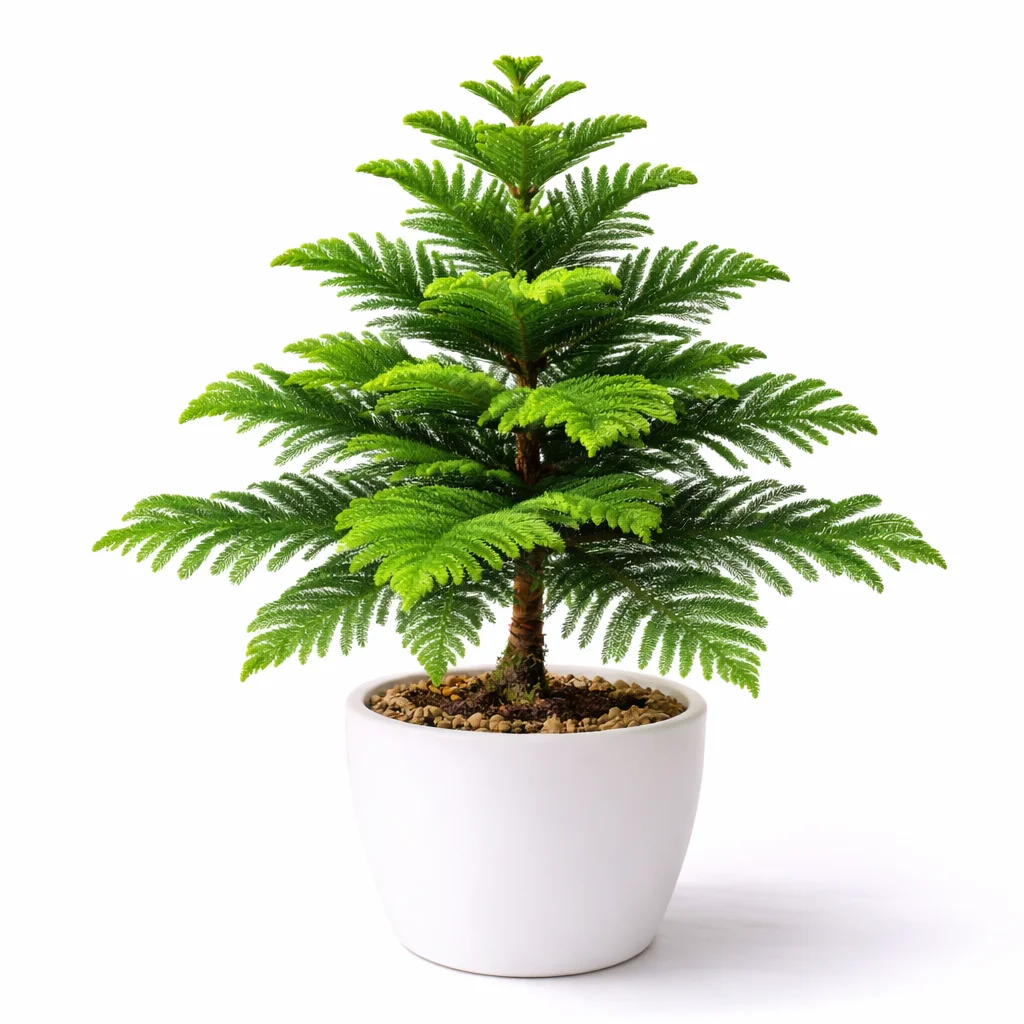
Norfolk Island Pine
Also known as: Araucaria Heterophylla
Light
Bright Indirect
Water
Moderate
Humidity
High
Size
Large
90-180+ cm (3-6+ ft)
⚠️ Toxic to Pets
Norfolk Island Pine contains compounds that are toxic to cats and dogs if ingested. Keep this plant out of reach of pets, or consider a pet-safe alternative.
Care Requirements
About the Norfolk Island Pine
The Norfolk Island Pine (Araucaria heterophylla) is native exclusively to Norfolk Island, a small Pacific island between Australia and New Zealand. Despite its name, it is not a true pine but a member of the ancient Araucariaceae family. It features symmetrical tiers of horizontal branches covered with soft, short, curved needles, creating a naturally Christmas-tree-shaped silhouette. In its native habitat it can reach 60 meters, but indoors it stays a manageable 1-2 meters and grows slowly. Often used as a living Christmas tree, it provides year-round softly textured greenery with its elegant, layered form.
Origin: Norfolk Island
Care Tips
Provide bright indirect light; ideally near a window with some direct sun. Rotate regularly for even growth, as it leans toward light. Water when the top 2-3 cm of soil is dry, keeping soil lightly moist. Brown, dropping lower branches usually indicate underwatering or dry air. Maintain moderate to high humidity -- this is a subtropical species from a maritime climate. Mist regularly or use a pebble tray. Feed monthly during the growing season with an acidic fertilizer (for acid-loving plants). Do not prune the central leader (top growth tip), as it does not regenerate. Propagation from cuttings is difficult; seed is the standard method.
Is This Plant Right for You?
Best For
- Bright rooms with good natural light
- Making a statement in spacious rooms
- Bathrooms or rooms with humidifiers
Not Ideal For
- Homes with curious pets
- Small apartments or tight spaces
- Very dry climates without humidity control
Similar Plants You Might Like
Ficus Audrey
Banyan Tree, Ficus Benghalensis
Bird of Paradise
Strelitzia
Philodendron Birkin
White Wave Philodendron
Philodendron Pink Princess
PPP, Blushing Philodendron
Polka Dot Begonia
Begonia Maculata, Spotted Begonia
Ti Plant
Cordyline Fruticosa, Hawaiian Ti