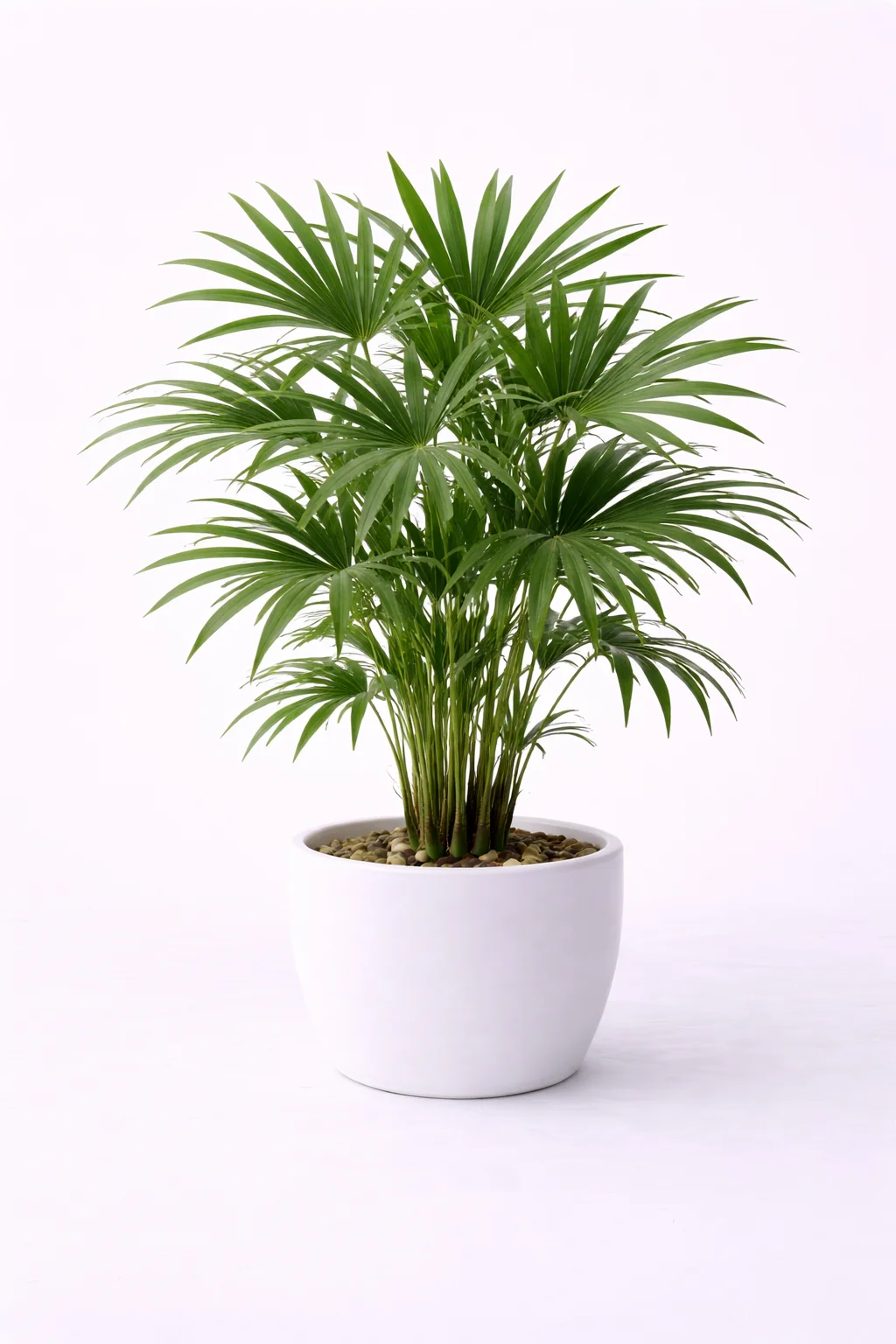
Lady Palm
Also known as: Rhapis Excelsa, Broadleaf Lady Palm
Light
Low
Water
Moderate
Humidity
Average
Size
Medium
30-90 cm (1-3 ft)
✓ Pet Safe
Lady Palm is non-toxic and safe for homes with cats and dogs.
Care Requirements
About the Lady Palm
The Lady Palm (Rhapis excelsa) is native to southern China and Taiwan, where it grows as an understory palm in dense subtropical forests. Its fan-shaped, deeply divided leaves are borne on slender, fiber-covered cane-like stems, creating a refined, bamboo-like appearance. The dark green leaflets radiate from a central point like outstretched fingers. Rhapis grows in dense clumps from underground rhizomes, producing a multi-stemmed, bushy silhouette. One of the most adaptable and durable palms for indoor use, it has been cultivated for centuries in Japan where rare variegated forms command premium collector's prices.
Origin: China
Care Tips
Prefers medium indirect light but tolerates low light well; avoid direct sun, which causes leaf bleaching. Water when the top 2-3 cm of soil is dry, keeping soil moderately moist. It is more tolerant of inconsistent watering than most palms. Average to high humidity is preferred but not critical. Feed monthly during the growing season with a balanced liquid fertilizer. Lady Palms are slow-growing and rarely need repotting more than every 2-3 years. Brown leaf tips can be trimmed without harming the plant. Propagate by dividing the clump at the rhizome during repotting, ensuring each division has roots.
Is This Plant Right for You?
Best For
- Low light rooms and offices
- Beginners and busy plant parents
- Homes with cats and dogs
- Improving indoor air quality
Not Ideal For
- No major concerns!
Lady Palm compared with…
Compare Lady Palm with any other plant →Similar Plants You Might Like
Parlor Palm
Chamaedorea Elegans, Neanthe Bella Palm
Bamboo Palm
Chamaedorea Seifrizii, Reed Palm
Ponytail Palm
Beaucarnea Recurvata, Elephant's Foot
Kentia Palm
Howea Forsteriana, Paradise Palm
Kangaroo Fern
Microsorum Pustulatum, Kangaroo Paw Fern
Blue Star Fern
Phlebodium Aureum