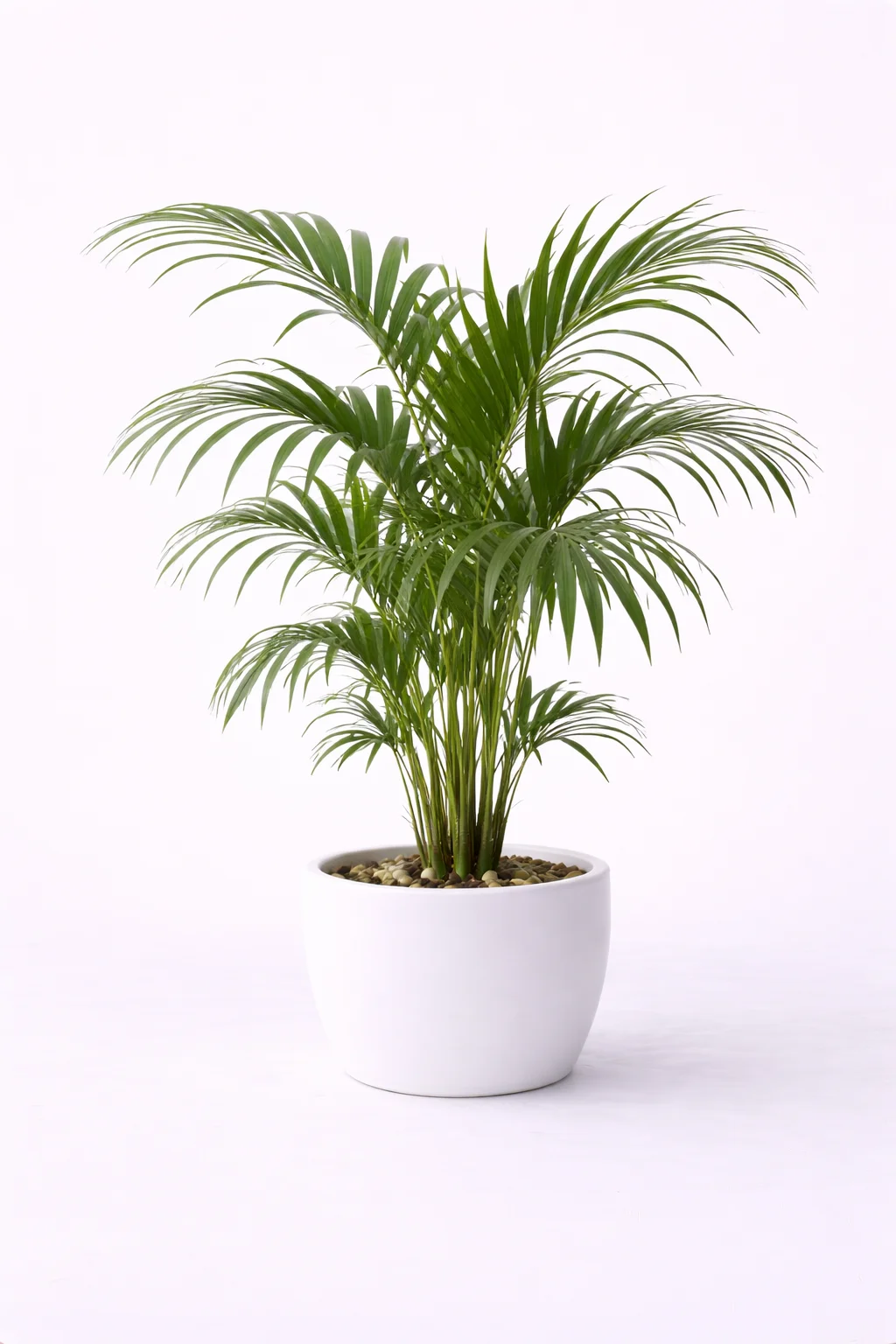
Kentia Palm
Also known as: Howea Forsteriana, Paradise Palm
Light
Low
Water
Low
Humidity
Low
Size
Large
90-180+ cm (3-6+ ft)
✓ Pet Safe
Kentia Palm is non-toxic and safe for homes with cats and dogs.
Care Requirements
About the Kentia Palm
The Kentia Palm (Howea forsteriana) is endemic to Lord Howe Island, a small volcanic island in the Tasman Sea east of Australia. Its elegant, arching pinnate fronds grow from a single slender trunk, creating a graceful, fountain-like canopy. Widely regarded as the most elegant indoor palm, it grows slowly to 2-3 meters indoors with a narrow, upright profile. The Kentia became the quintessential Victorian parlor palm and has adorned luxury hotels, including the Ritz in London, for over a century. Its unmatched tolerance of low light, dry air, and cool temperatures makes it ideal for indoor cultivation.
Origin: Lord Howe Island
Care Tips
Thrives in low to medium indirect light -- one of the most shade-tolerant palms. Avoid direct sun, which yellows the fronds. Water when the top 2-3 cm of soil is dry; it prefers slightly moist soil but tolerates some dryness. Avoid overwatering, which causes root rot. More tolerant of low humidity and cool temperatures (down to 10C) than most palms. Feed 2-3 times during the growing season with a palm fertilizer. Kentia palms resent repotting, so only repot when truly root-bound -- they grow best slightly pot-bound. Wipe fronds occasionally. Propagation is by seed only and takes several months to germinate.
Is This Plant Right for You?
Best For
- Low light rooms and offices
- Beginners and busy plant parents
- Homes with cats and dogs
- Forgetful waterers
Not Ideal For
- Small apartments or tight spaces
Kentia Palm compared with…
Compare Kentia Palm with any other plant →Similar Plants You Might Like
Parlor Palm
Chamaedorea Elegans, Neanthe Bella Palm
Lady Palm
Rhapis Excelsa, Broadleaf Lady Palm
Bamboo Palm
Chamaedorea Seifrizii, Reed Palm
Ponytail Palm
Beaucarnea Recurvata, Elephant's Foot
Majesty Palm
Ravenea Rivularis
Areca Palm
Dypsis Lutescens, Butterfly Palm