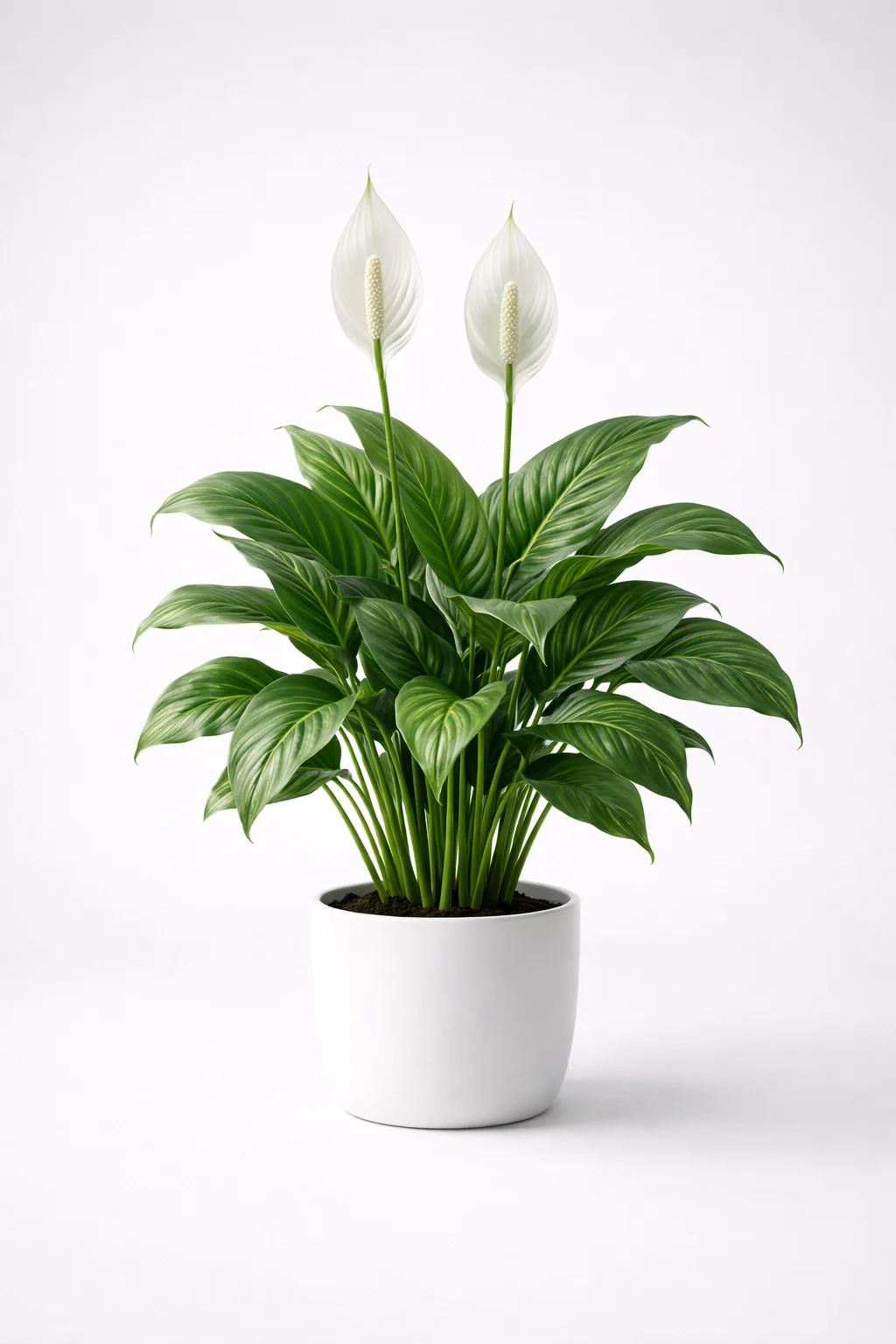
Peace Lily
Also known as: Spathiphyllum
Light
Low
Water
Moderate
Humidity
High
Size
Medium
30-90 cm (1-3 ft)
⚠️ Toxic to Pets
Peace Lily contains compounds that are toxic to cats and dogs if ingested. Keep this plant out of reach of pets, or consider a pet-safe alternative.
Care Requirements
About the Peace Lily
The Peace Lily (Spathiphyllum) is native to the tropical rainforest floors of Central and South America and Southeast Asia. It produces elegant white spathes that surround a cream-colored spadix, blooming primarily in spring but often reflowering throughout the year. Its glossy, dark green lance-shaped leaves arch gracefully from the base. Peace Lilies ranked among the top air-purifying plants in NASA's Clean Air Study, removing benzene, formaldehyde, and trichloroethylene. They famously droop when thirsty, providing a clear visual watering cue.
Origin: Central America
Care Tips
Prefers low to medium indirect light; too much direct sun bleaches the leaves, while low light reduces flowering. Keep soil consistently moist but never waterlogged -- water when the top centimeter feels dry or when the plant begins to droop slightly. Thrives in humidity above 50%; brown leaf tips often signal dry air. Feed with a diluted balanced fertilizer every 6-8 weeks during the growing season. Remove spent flower stalks at the base. Divide overcrowded clumps in spring by separating the root ball into sections, each with several leaves.
Is This Plant Right for You?
Best For
- Low light rooms and offices
- Beginners and busy plant parents
- Bathrooms or rooms with humidifiers
- Improving indoor air quality
Not Ideal For
- Homes with curious pets
- Very dry climates without humidity control
Peace Lily compared with…
Compare Peace Lily with any other plant →Similar Plants You Might Like
Bromeliad
Guzmania, Scarlet Star
Kalanchoe
Kalanchoe Blossfeldiana, Flaming Katy
Golden Pothos
Devil's Ivy, Money Plant
Snake Plant
Sansevieria, Mother-in-Law's Tongue
Chinese Evergreen
Aglaonema
Anthurium
Flamingo Flower, Laceleaf