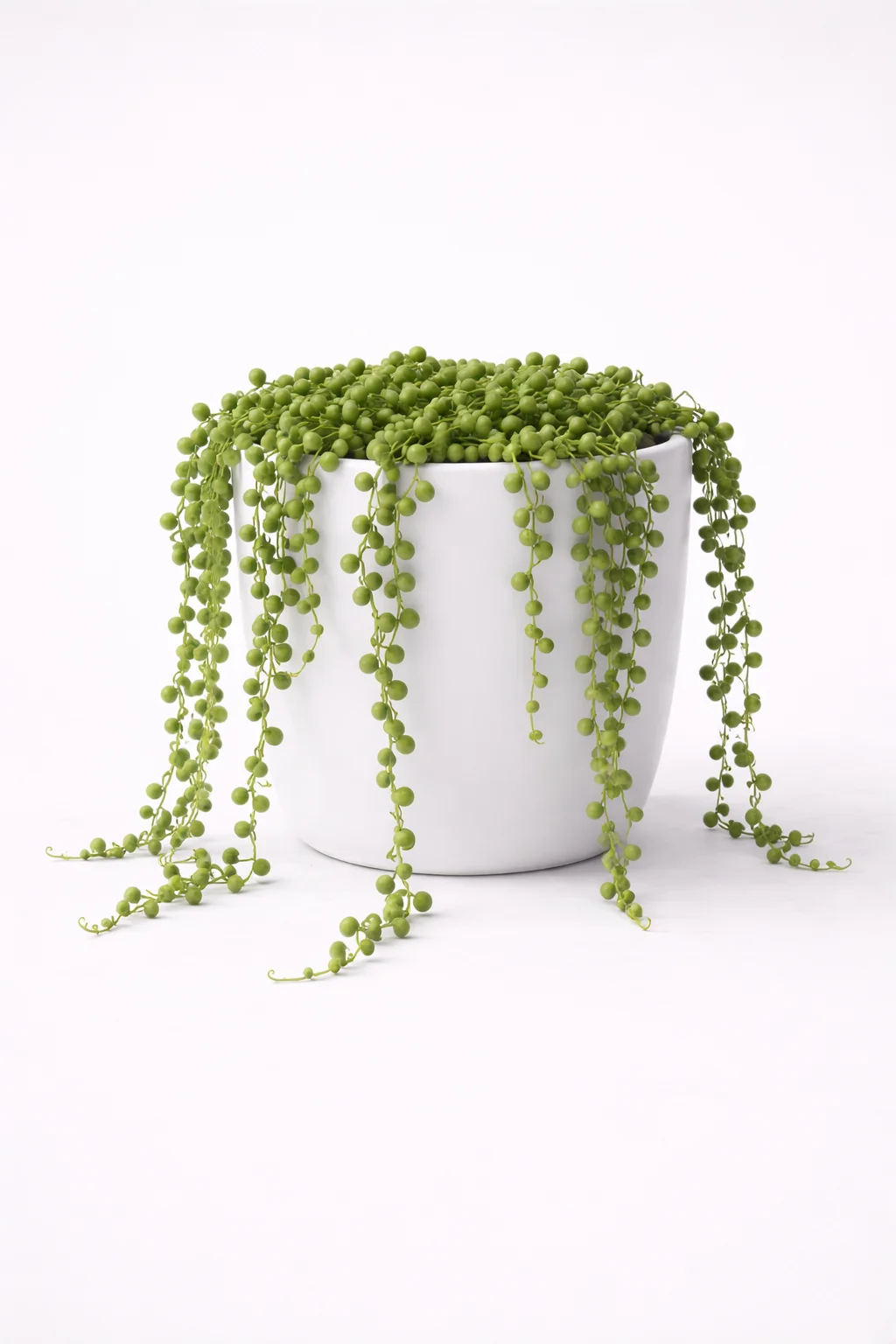
String of Pearls
Also known as: Senecio Rowleyanus
Light
Bright Indirect
Water
Very Low
Humidity
Very Low
Size
Small
15-30 cm (6-12 in)
⚠️ Toxic to Pets
String of Pearls contains compounds that are toxic to cats and dogs if ingested. Keep this plant out of reach of pets, or consider a pet-safe alternative.
Care Requirements
About the String of Pearls
String of Pearls (Senecio rowleyanus, now Curio rowleyanus) is native to the dry regions of southwest Africa, where it creeps along the ground in the partial shade of rocks and other plants. Its trailing stems bear spherical, bead-like leaves with a translucent window stripe that allows light to reach the interior chlorophyll -- an adaptation for water storage and photosynthetic efficiency in arid habitats. In cultivation, cascading strands can trail over 60 cm, creating a striking waterfall effect from a hanging planter or high shelf.
Origin: South Africa
Care Tips
Provide bright indirect light with some morning direct sun; insufficient light causes the pearls to elongate and lose their round shape. Plant in a fast-draining succulent mix with extra perlite. Water deeply but infrequently, allowing the soil to dry completely -- roughly every 10-14 days in summer and less in winter. Overwatering causes the pearls to burst and stems to rot. Average to low humidity is ideal. Feed monthly during the growing season with a diluted succulent fertilizer. Propagate by laying stem cuttings on moist soil and pinning at the nodes.
Is This Plant Right for You?
Best For
- Bright rooms with good natural light
- Forgetful waterers
- Desks, shelves, and small spaces
- Sunny windowsills
Not Ideal For
- Homes with curious pets
String of Pearls compared with…
Compare String of Pearls with any other plant →Similar Plants You Might Like
String of Dolphins
Senecio Peregrinus, Dolphin Plant
Burro's Tail
Sedum Morganianum, Donkey's Tail
Aloe Vera
Medicinal Aloe, Burn Plant
String of Buttons
Crassula Perforata, Necklace Vine
Baby Necklace
Crassula Rupestris, Kebab Bush
String of Bananas
Senecio Radicans, Fishhook Senecio