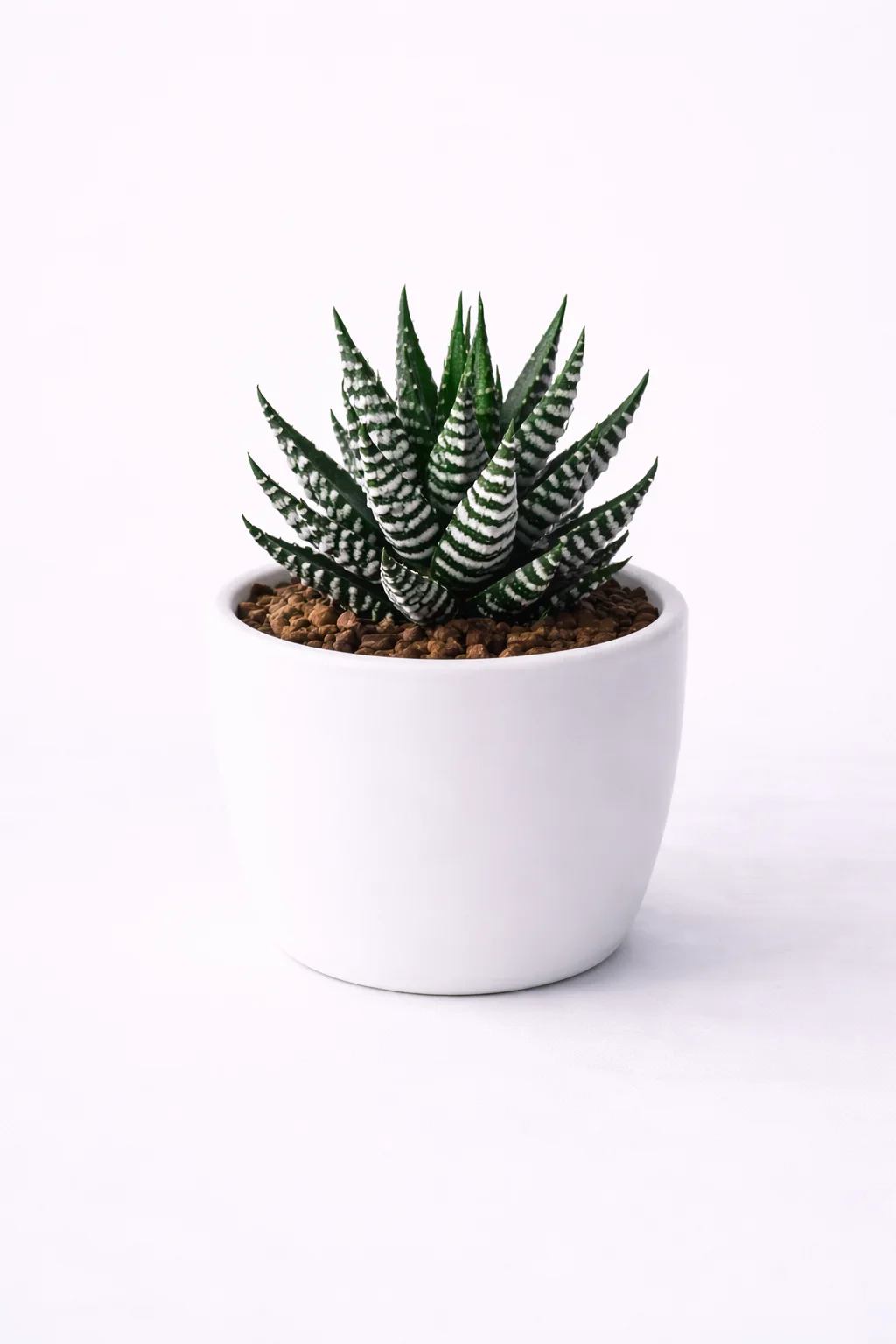
Zebra Haworthia
Also known as: Haworthia Fasciata, Zebra Plant
Light
Medium (Indirect)
Water
Very Low
Humidity
Very Low
Size
Small
15-30 cm (6-12 in)
✓ Pet Safe
Zebra Haworthia is non-toxic and safe for homes with cats and dogs.
Care Requirements
About the Zebra Haworthia
Zebra Haworthia (Haworthiopsis attenuata) is a small succulent native to the Eastern Cape Province of South Africa, where it grows in rocky outcrops partially sheltered from direct sun. It forms a compact rosette of dark green, triangular leaves covered in distinctive raised white tubercle stripes that resemble a zebra's pattern. The rosettes typically reach only 10-15 cm in diameter and height. The plant gradually produces offsets, forming a tight cluster over time. Its petite size, bold patterning, and minimal care requirements make it one of the most popular succulents for windowsills and desk gardens.
Origin: South Africa
Care Tips
Prefers bright indirect light; can handle some direct morning sun but midday and afternoon direct sun can cause leaf scorching and reddening. Plant in a well-draining succulent or cactus mix with extra perlite. Water when the soil is completely dry, roughly every 2 weeks in summer and monthly in winter. Less prone to rot than many succulents but still sensitive to standing water. Average household humidity is fine. Feed 2-3 times during the growing season with a diluted succulent fertilizer. Propagate by separating offsets from the mother plant or by rooting healthy leaf cuttings in dry soil.
Is This Plant Right for You?
Best For
- Living rooms with indirect light
- Beginners and busy plant parents
- Homes with cats and dogs
- Forgetful waterers
Not Ideal For
- No major concerns!
Zebra Haworthia compared with…
Compare Zebra Haworthia with any other plant →Similar Plants You Might Like
Haworthia Cooperi
Cooper's Haworthia, Window Haworthia
Echeveria
Hen and Chicks
Aloe Vera
Medicinal Aloe, Burn Plant
Jelly Bean Plant
Sedum Rubrotinctum, Pork and Beans
String of Buttons
Crassula Perforata, Necklace Vine
Baby Necklace
Crassula Rupestris, Kebab Bush