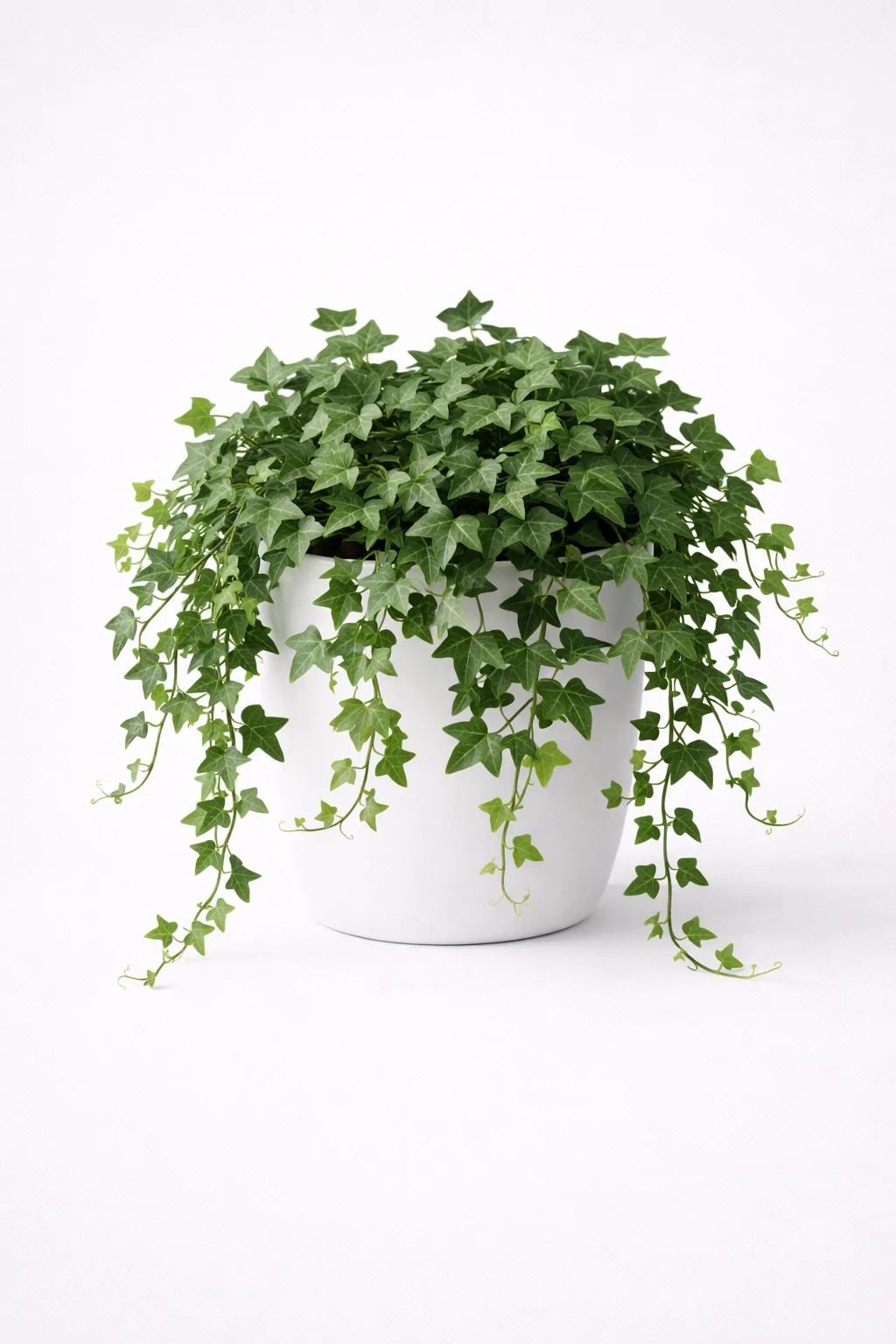
English Ivy
Also known as: Hedera Helix
Light
Medium (Indirect)
Water
Moderate
Humidity
Average
Size
Medium
30-90 cm (1-3 ft)
⚠️ Toxic to Pets
English Ivy contains compounds that are toxic to cats and dogs if ingested. Keep this plant out of reach of pets, or consider a pet-safe alternative.
Care Requirements
About the English Ivy
English Ivy (Hedera helix) is native to Europe, western Asia, and North Africa, where it climbs trees, walls, and rocky surfaces using adventitious rootlets. Its lobed, typically three or five-pointed leaves come in a wide range of cultivars with varied leaf shapes, sizes, and variegation patterns in greens, golds, and whites. As a houseplant, it cascades from hanging baskets or climbs supports with aerial rootlets. It ranked highly in NASA's Clean Air Study for its ability to remove airborne pollutants including formaldehyde, benzene, and mold spores.
Origin: Europe
Care Tips
Prefers bright indirect light; variegated varieties need more light to maintain their coloring. Prefers cool temperatures between 10-21C -- hot, dry rooms encourage spider mites, its most persistent pest. Keep soil evenly moist but not waterlogged, allowing the surface to dry slightly between waterings. Higher humidity helps; mist regularly and inspect leaf undersides weekly for spider mites. Feed every two weeks during the growing season with a balanced liquid fertilizer. Prune regularly to maintain shape and encourage bushy growth. Propagate easily by rooting stem tip cuttings in water.
Is This Plant Right for You?
Best For
- Living rooms with indirect light
- Beginners and busy plant parents
- Improving indoor air quality
- Hanging baskets and high shelves
Not Ideal For
- Homes with curious pets
English Ivy compared with…
Compare English Ivy with any other plant →Similar Plants You Might Like
Heartleaf Philodendron
Philodendron Hederaceum, Sweetheart Plant
Philodendron Brasil
Brazil Philodendron, Variegated Heartleaf
Marble Queen Pothos
Variegated Pothos
Neon Pothos
Lime Pothos
Pothos N'Joy
N'Joy Pothos
Satin Pothos
Scindapsus Pictus, Silver Pothos