African Violet vs Cyclamen
The African violet is pet-safe and blooms indoors year-round for years. The cyclamen is a winter plant that goes dormant, and its tubers are toxic.
African Violet is non-toxic to cats and dogs. Cyclamen is toxic to cats and dogs if chewed, so it needs a shelf pets cannot reach. African Violet rates 4/5 for humidity - group plants or run a humidifier in winter. Cyclamen rates 3/5, so normal household humidity works.
What they share: both are rated medium, both want medium indirect light, both take moderate watering and both stay small.
Choose
African Violet if…
- ✓it will live in a bathroom, kitchen or a humidified room
- ✓cats or dogs chew your plants - this one is non-toxic
- ✓the look is what you are after: Beloved flowering houseplant in purple, pink, white. Blooms repeatedly.
Choose
Cyclamen if…
- ✓your home runs dry in winter and you will not add a humidifier
- ✓it can go somewhere pets genuinely cannot reach
- ✓the look is what you are after: Elegant butterfly-like flowers in winter. Goes dormant in summer.
African Violet vs Cyclamen: side by side
| Attribute |
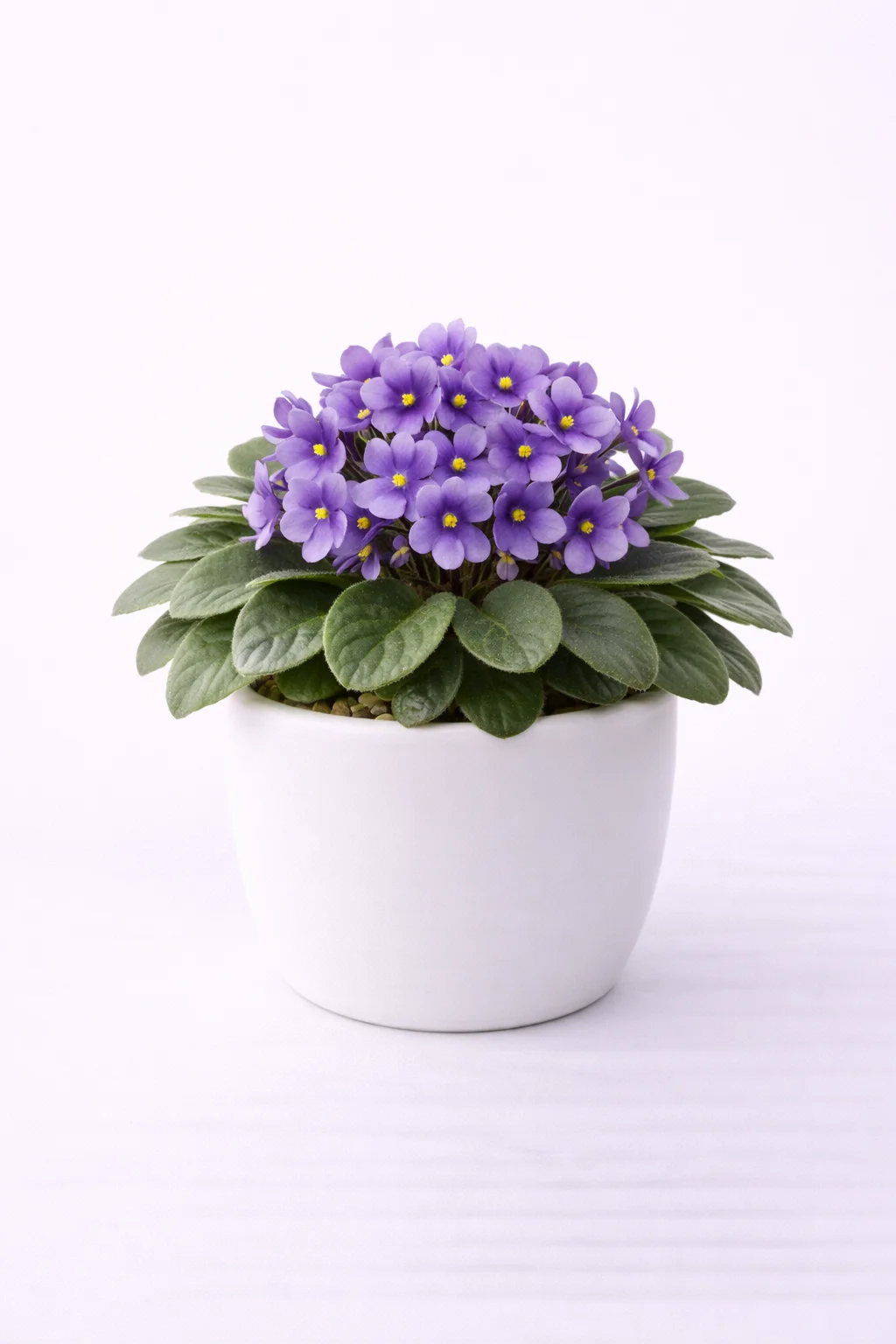 African Violet
|
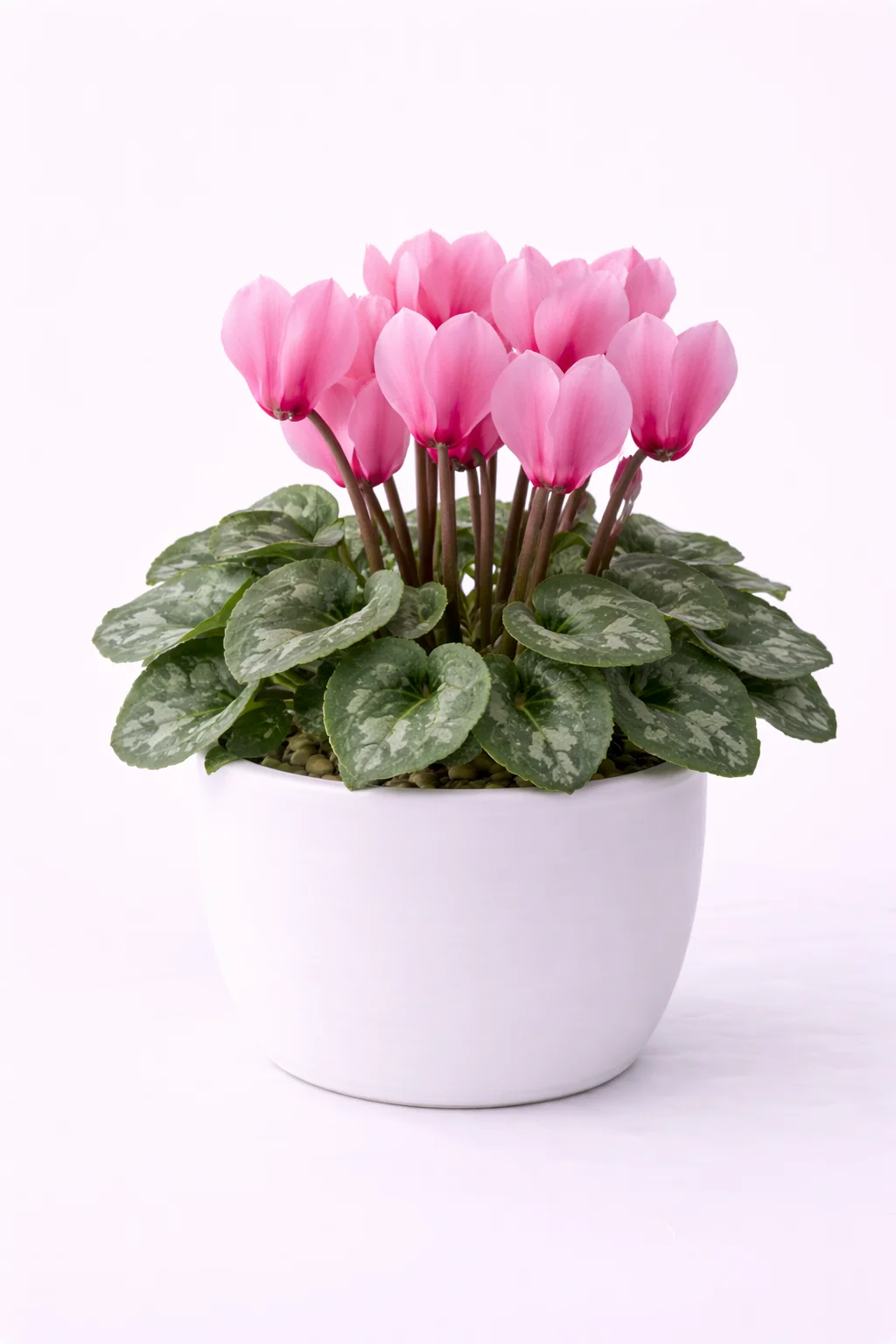 Cyclamen
|
|---|---|---|
| Plant type | Flowering | Flowering |
| Difficulty | medium | medium |
| Light | ●●●○○ 3/5 Medium indirect light |
●●●○○ 3/5 Medium indirect light |
| Water | ●●●○○ 3/5 Moderate |
●●●○○ 3/5 Moderate |
| Humidity | ●●●●○ 4/5 Above average |
●●●○○ 3/5 Average |
| Pet safe | Safe | Toxic to cats and dogs |
| Mature size | Small 15-30 cm (6-12 in) |
Small 15-30 cm (6-12 in) |
| Growth rate | Moderate | Moderate |
| Air purifying | No | No |
| Native to | East Africa | Mediterranean |
Key differences between African Violet and Cyclamen
African Violet is pet-safe, Cyclamen is not
African Violet is non-toxic to cats and dogs. Cyclamen is toxic to cats and dogs if chewed, so it needs a shelf pets cannot reach.
African Violet needs damper air
African Violet rates 4/5 for humidity - group plants or run a humidifier in winter. Cyclamen rates 3/5, so normal household humidity works.
They come from different habitats
African Violet originates in East Africa; Cyclamen in Mediterranean. Matching the original habitat is the quickest way to guess what each one wants indoors.
How to tell African Violet and Cyclamen apart
The African violet blooms indoors year-round in modest light and lives for years. The cyclamen is a winter plant that goes fully dormant in summer and is usually treated as seasonal. Cyclamen tubers are toxic to pets; African violets are not.
Care at a glance
African Violet
Saintpaulia
Beloved flowering houseplant in purple, pink, white. Blooms repeatedly.
Care in one line: Bright indirect light, water from below, avoid wet leaves.
Full African Violet care guide →
Cyclamen
Florist's Cyclamen, Persian Cyclamen
Elegant butterfly-like flowers in winter. Goes dormant in summer.
Care in one line: Cool bright spot, water from below, keep cool for blooming.
Full Cyclamen care guide →African Violet vs Cyclamen: common questions
What is the difference between African Violet and Cyclamen? +
The African violet blooms indoors year-round in modest light and lives for years. The cyclamen is a winter plant that goes fully dormant in summer and is usually treated as seasonal. Cyclamen tubers are toxic to pets; African violets are not. On care, african Violet is non-toxic to cats and dogs. Cyclamen is toxic to cats and dogs if chewed, so it needs a shelf pets cannot reach.
Which is easier to care for, African Violet or Cyclamen? +
Neither - both are rated medium. The practical difference is african violet is pet-safe, cyclamen is not.
Is African Violet or Cyclamen safe for cats and dogs? +
African Violet is non-toxic to cats and dogs. Cyclamen is toxic to cats and dogs if chewed, so keep it out of reach or choose the African Violet.
Which needs less light, African Violet or Cyclamen? +
They are the same. Both score 3/5 for light, meaning near a bright window, out of direct sun.
Which needs more water, African Violet or Cyclamen? +
Neither - both score 3/5. For each one, water when the top 2-3 cm is dry, roughly weekly.
Comparing something else?
Put any two or three of our 116 houseplants head to head on light, water, humidity, size and pet safety.
Build your own comparison →